There is no frigate like a book
To take us lands away,
Nor any coursers like a page
Of prancing poetry.
~ Emily Dickinson

Literature is my Utopia. Here I am not disenfranchised. No barrier of the senses shuts me out from the sweet, gracious discourses of my book friends. They talk to me without embarrassment or awkwardness. ~ Helen Keller

Thursday, 8 May 2014

Review: Wolf Hall


Wolf Hall
Wolf Hall by Hilary Mantel

My rating: 5 of 5 stars


Is there any greater pleasure than when a book one has harbored high expectations for, actually exceeds those expectations? I expected to like Wolf Hall: Having first learned Tudor history as a child through accounts of the English reformers, I first met Cromwell as a friend to the reformation; I was quite shocked by the caricaturization of him as evil in A Man for All Seasons. Secondly, after reading Mantel's controversial speech on Royal Bodies, I conceived a tremendous respect for her insight, intelligence, and compassion. To be honest, I put off reading Wolf Hall until now because I was reserving it as a special treat.

It didn't disappoint, but it did surprise me. My first surprise was that Cardinal Wolsey (or Cardinal Wolfsey, the Wiley Wolf, as the Tyndale in the first “Tudor-era” book I obsessively read as a child called him) actually had his good points. Yes, Mantel's speech had led me to expect in her this ability to see the depth of even the most hypocritical or shallow characters. I expected a sympathetic Cromwell, yet her portrayal was more than sympathetic, it was broad-ranging, personal, and touching.

At first I found the unclear antecedents before pronouns disconcerting, but after realizing that most instances of the word he referred to Cromwell, I found it added to the claustrophobic sense of his thoughts as the nucleus. One sees Cromwell in varied situations, always changing, yet still somehow the same. After 650 pages of intimacy, one feels that they should know him, but do not. His own acknowledgement that “my workings are hidden from myself” illustrates how he can be simultaneously vulnerable and intimidating, possess the milk of human kindness and still be the consummate politician.

A blurb on the back cover compares the novel to Middlemarch. Last year reading Mantel's wonderful blend of compassion and intelligence about the royals, I'd wondered if she was familiar with Middlemarch. ( http://litlass.tumblr.com/post/43605436451/middlemarch-and-princesses ) While I still would rank the latter novel more highly, I recall that it took me a second reading to realize just how fearful and wonderful it is. I'm already hungry for a second reading of Wolf Hall. First, though, must come Bring Up the Bodies (delicious titular reference!). Again, I'm so excited I'm almost frightened to start.


View all my reviews

Thursday, 27 March 2014

Review: The Violent Friendship Of Esther Johnson


The Violent Friendship Of Esther Johnson
The Violent Friendship Of Esther Johnson by Trudy J. Morgan-Cole

My rating: 5 of 5 stars


I've been reading Trudy J. Morgan-Cole's blog for several years. I appreciate both her thoughts on our shared Seventh-day Adventist faith and her eclectic book reviews. Strangely, I have learned about several historical novels that are now favorites from Morgan-Cole's blog before reading any of her novels. She's an acute judge of what makes historical novels work and The Violent Friendship of Esther Johnson demonstrates this.

The novel is the story of Jonathan Swift's muse, correspondent, close friend, and possible wife -- the eponymous Esther Johnson. Morgan-Cole has chosen an ideal subject through which to analyze women's lives in the seventeenth and eighteenth centuries. Growing up in a great house as the housekeeper's daughter, Esther associates daily with servants, and occasionally with laborers. Yet under Jonathan Swift's tutelage, she is more educated than most women of her day. Morgan-Cole manages to portray an intelligent and intellectual woman, without making her anachronistic or prodigious. Ultimately she portrays a fully-realized woman; one both proud and needy, timid and courageous, sexual and repressed, guilty and spiritual. Without being strongly plot driven, the book was hard to put down.

The portrait of Jonathan Swift, especially toward the end, is somewhat repulsive. Reading about Swift's Christian Humanist views in the introduction to my volume of his Selected Works, I gained some respect for him that I didn't from this novel. However, the mixture of disgust, disdain and pity that this novel evokes for a great man is consistent with Swift's own dark view of mankind's depravity. Having just read Gulliver's Travels I am tempted to simply reread Esther Johnson which would be the richer for the contrast and comparison. It's a book drafty with the illness, worry, and misogyny endured by the woman Swift transmuted into the Stella of his poetry. Yet it's also a book bright with the loyalty, love and determination of women.

I am eager to read another of Morgan Cole's novels soon. Maybe it will be her one about Jesus' brother James, or perhaps one of her Maritime novels.


View all my reviews

Wednesday, 8 January 2014

My Top Ten (New) Books of 2013

Choosing a Top Ten list is hard for any bibliophile. Fellow-blogger Samantha inspired me to post mine, albeit eight days into the new year. (How she winnowed hers out of the 200 books she read is still a marvel to me.)

I'm tempted to include rereads, since rereading a beloved book is the best kind of reading. I did have some wonderful rereads this year: Hamlet, Richard II, Pride and Prejudice for its bicentennial, Austen's unfinished works, the first four Anne Shirley novels, and (of course) Jane Eyre. However, those works would crowd out most others, so, with one exception, these are all books read for the first time in 2013. The list is evenly split between fiction and non-fiction, but women authors, unsurprisingly, predominate.

Busman's Honeymoon by Dorothy Sayers


 Sayers is the author whom I read the most this year. I looked forward to Gaudy Night, of which I'd heard many things, as the pinnacle of Sayers' work. It was wonderful, but it was Busman's Honeymoon that shook and affected me. The setting is simple: Lord Peter Wimsey and his new bride, mystery writer Harriet Vane, arrive at a country cottage for their honeymoon. Bodies, however, seem to follow the hobbyist detective and he's soon caught up in an investigation, with the aid of a superintendent almost as interested in identifying Peter's literary quotations as in identifying the murderer.

The novel's real power comes from its portrayal of the pain, vulnerability, and joy of creating a marriage of genuine equality and respect. The epistolary introduction featuring Peter's inimitable mother is hilarious, the many John Donne references are both intelligent and evocative, and the mystery is sufficiently mysterious. 

The Sunne in Splendour by Sharon Kay Penman

  Finding Sunne for a dollar in a thrift store --only a month or two after the discover of Richard III's bones had me especially interested, and at a time I needed an absorbing novel to distract me -- was serendipitous. The quintessential Ricardian novel, at almost 1000 pages, reading it is truly an experience. Penman's attempt to create an old speech style has some annoying idiosyncrasies and if you want an unbiased look at England's most controversial king, this is not it. However, if you want to be immersed in a period, fall in love, and cry over dead kings -- this is the historical novel for you. I end up crying whenever I read a page of the last section.

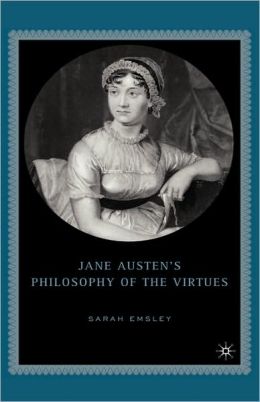
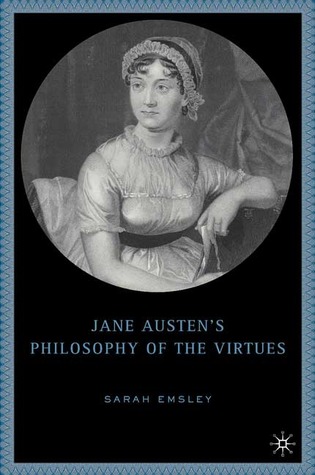
Jane Austen's Philosophy of the Virtues by Sarah Emsley
After reading several of Emsley's articles in Persuasions journal, I desperately wanted to read her book-length dissertation on Austen. My blogging friend Esther lent me the book and it did not disappoint. I converted my numerous pages of notes into posts on each chapter, which led to some wonderful discussions of Austen's faith and philosophy.

The Green Gables Letters: From L.M. Montgomery to Ephraim Weber 1905-1909
 This is probably my favourite nonfiction book of the year, so naturally I don't know where to begin. I reread four of Mongtomery's novels and a book of literary criticism of Anne of Green Gables over the fall, but this surpassed them all. Montgomery's letters to her Alberta pen-pal, Ephraim Weber, are intimate, yet elegant and profound. She easily switches from writing advice to contemplations of immortality. Jokes and anecdotes abound, but do not obscure the daguerreotype of a woman living in the minutiae of her responsibilities. Her frank disavowal of orthodox Protestant doctrines -- from eternal torment to the virgin birth -- does not lessen her joy in the poetry and wisdom of the Bible. In short, Weber and Montgomery were clearly such kindred spirits that she was not, as in some of her novels, constrained by public expectation or judgement. She truly found her sentence and it is lucid and strong. Now I just have to find out if the library will sell me this casket of gems.

Adam Bede by George Eliot
 

This was the only George Eliot novel I read this year and I admit it shows a few rough edges, easily excused in a firstborn. As in Middlemarch, each character is a part of an intricate web of moral influence. From the Methodist woman field-preaching, to scenes among workmen, Eliot's attention to the lives of "common people" is Wordsworthian. Indeed, the plot as well the descriptions is likely derived from Wordsworth's "The Thorn". Excruciatingly vain and naive Hetty Sorrel is seduced by the young squire of the county. They, and those who care for them, soon learn that "our deeds determine us as much as we dertermine our deeds" and consequences of unthinking moments may plunge us into hellish torments. Eliot's insight, wisdom, humour, and power of creating living characters stayed with me long after I layed the book aside.

The Handmaid's Tale by Margaret Atwood

One day I felt a sudden urge to read a dystopian novel and pulled this out of my stacks. It was a painful and draining read, almost without a glimmer of hope. However, it gave me the language to express my horror and fear when I soon after read about the extremes of the Christian Patriarchy movement.

The Magician's Nephew by C. S. Lewis


Coming to C.S. Lewis as an adult, I'm perhaps hampered by analysis. Last week's reading of The Horse and His Boy was made slightly uncomfortable by Lewis' emphasis on skin color and other seemingly-racial characteristics in dividing up the good and bad factions . It could be argued that the allegory of The Magician's Nephew is a bit obvious, but the thrills of joy I experienced watching the creation of a new world, and "meeting" Aslan justify the novel's inclusion on this list.

Mightier Than the Sword: Uncle Tom's Cabin and the Battle for America by David S Reynolds

Uncle Tom's Cabin is quite a flawed novel, yet it had a tremendous influence on public opinion, and some claim helped to launch the Civil War. Reynolds' exploration of the stories behind the novel, and of the novel's subsequent reincarnation in stage and film teaches much about the process of creating literature and its power once made public. I appreciated the book most as a cultural history of race relations, religion, theatre, literature, and story in America over several decades.

The Seventh-day Ox and Other Miracle Stories from Russia by Bradley Booth

Since age eight, it seems I've read a score of books about faithful believers in prison camps. This book stood out for the incredible suffering endured by the pastor in the titular story. For several years he spent ten day stretches confined in a small crate for his refusal to work on the seventh day; when finally allowed to prove to the prison warden that he could accomplish seven days' work in six, a recalcitrant ox made it seem that his trials had just begun. It's a story full of the lows of man's inhumanity to man, the incalculable highs of God's sustaining power, and the lighter highs of the humor animals bring to our lives.

A Room of One's Own by Virginia Woolf


My last book is a cheat, since it is a reread. However, I first read it four or five years ago, and maybe I wasn't mature enough for it. This time reading it was pure delight, and I was in constant awe of Woolf's creative and strong thought process. I'm still trying to reconcile her insistence that women should write in their own distinctly female "sentence" with her appropriation of Coleridge's idea that writing of true genius is androgynous. Maybe to fully understand and absorb such a unique work I'll have to do as I once heard Emma Thompson did -- keep it in my purse and pull it out to reread repeatedly.

Some of you are being negligent bloggers, and with less excuse than laptop-less me. :D What were your favourite books of the past year? What are your reading plans for 2014? One of mine is to count by pages read, rather than books completed. This is partially so I'll grant myself the freedom to give up on a badly written or boring book without guilt. I'll also count when I read a magazine straight through, as I often do with one on religious Liberty. Here's to a copious reading year!


Monday, 16 September 2013

Summer Reading Roundup (Part 2)


 (Containing the more literary books read this summer, lest anyone is disappointed in the odd content of my first roundup.)

One of my big summer reads, of course, was Jane Austen's Philosophy of the Virtues by Sarah Emsley. Here's the first post in my series on it. Those who enjoy this series may also enjoy my friend Esther's series on the same book. I also recently enjoyed reading Emsley's series for the bicentennial of Pride and Prejudice, especially her post: Does Mr Collins Read Novels?

The Red Tent by Anita Diamant
(Completed partly as audiobook)


As a feminist Christian, I think that Patriarchy in the Bible created many problems. This is well demonstrated in the story of Jacob and his wives and concubines, and his daughter Dinah. Diamant's feminist reimagining of the story of Dinah has been much lauded, and I did enjoy her thoughts on feminism and authorship in her introduction to the reissued novel. However, acknowledgment of the problems of Patriarchy doesn't have to mean that we paint all men as boors or villains, especially influential ones in Jewish and Christian spirituality, such as Jacob and Joseph. I almost prefer a Patriarchy in which these men "command their households" after the one God, than this version of female power through persistent polytheism. Despite beautiful prose, it was quite a depressing book, and I agree with my friend 3gee on Tumblr that it adds little to my understanding of Genesis. I found this hermeneutical examination of Dinah's story both more relevent to feminist concerns, and more respectful of the biblical record. It examines the systems of oppression and violence that led and resulted from Dinah's rape, while maintaining her agency in her own story.


Lady Susan, The Watsons, Sanditon by Jane Austen (reread, actually listened to LS as librivox recording)


I decided to reread this because of the Youtube series Welcome to Sanditon, by the creators of the Lizzie Bennet Diaries. Lady Susan has some great lines, but the epistolatory form prevents Austen from developing each member of her cast so distinctly as in novels with more dialogue. Rereading The Watsons made me grieve that it's unfinished. I know some critics have felt that written during a time Austen was likely in low spirits, it lacks the sparkle and promise of her other works. I think it has tremendous potential. There's the fact that Mr Watson was to die during the course of the novel -- while in most of Austen's works death is only mentioned in the opening narration. Then there is poor Emma Watson having to be "dependent for a home" on that buffoon Robert and her equally egregious sister-in-law. Lord Osborne is also a buffoon, but his interest in Emma may be more extreme (in class distinction) than Darcy's in Elizabeth. Poor Mr Howard is to pursued by Lady Osborne, creating a love triangle of sorts. And my suspicion is that Margaret may have been readying to run away with Tom Musgrave.

As for Sanditon, it's also funny and fresh, exploring themes new for Austen. Unfortunately, the webseries was awful. I ranted about it on Tumblr.

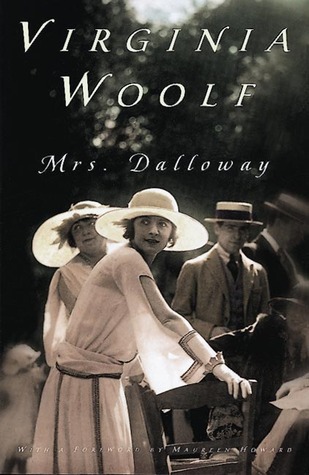
Mrs Dalloway by Virginia Woolf (reread, to be embarrassingly honest)

Yes, I'd read this novel before, but I guess three years ago I was too young and impatient for its aching, slow beauty. This time I determined to simply appreciate it, and I found it a perfect read for summer -- teaching me to focus on the sensations, and rest in the moment. Of course, the novel is not just beautiful prose. It contains the "heavy, and the weary weight" of everyday tragedy. Woolf makes us instinctively feel a part of every life, no matter how trivial, degraded, jealous, impotent, or damaged. To paraphrase Emily Dickinson, this novel is "just the weight" of life.

Adam Bede by George Eliot

When I first started watching the web-series I would read the comments, and chuckle at all the people shipping Edward and Clara. spoiler for the real work follows — In the text, Sir Edward Denham aspires to be the kind of rake in Samuel Richardson’s novels. His intention is to seduce (and if “necessary” kidnap!) the poor dependent Clara Brereton. His deliberately misreads popular novels (pop culture, as the webseries chose to transliterate it) to further his attempts to manipulate women. If the webseries had chosen to take this angle, they could have initiated real dialogue about dude-bros* patriarchy, gender relations, and even rape culture. Instead they went with a syrupy romance, with no real tension or interest - See more at: http://litlass.tumblr.com/post/59056207383/welcome-to-sanditon-rant#sthash.N63o58l3.dpuf
This was Eliot's first full-length novel and it does contain a few literary tropes that disappear in her later masterpieces. However, this novel has gained a special place in my heart. Reading it had the effect that all great things -- music, poetry, novels, art, even theology -- have: it made me see everything through its prism. It transformed the very air around me. I felt that those who have not read it could not have the same consciousness I had attained. Drawing to the end, I felt all other books and experiences would be flat and stale after my immersion in Dinah, Adam and Hetty's world. (My feet did return to earth quite quickly, but I would not exchange the brief experience of floating above common things.)

Yet all this is strange, because Adam Bede is (except for those small tropes) a supremely realistic work. Set in the rural world of early 19th century England, the land may be sometimes idealized, but its inhabitants are not. It's also a work replete with homely humor. Smiley faces decorate most of Mrs Poyser's speeches in my copy.

Like Eliot's other works, it's a complex study in psychology, especially drawing on Wordsworth. Like all Eliot's works, it called me to self-examination of how my "personal" faults affect others, but also called me to be less black and white in my condemnations of others' seemingly-heinous sins.  I return to my absorption in the fortunes of its characters when I quote Dickens' words as true for me: "Adam Bede has taken its place among the actual experiences and endurances of my life."


An Abundance of Katherines by John Green (Young Adult novel)
Dear An Abundance of Katherines ~

I like you; I just don't love you. You're really funny, and you have the breathless, unique voice of your creator Mr Green. You're smart: I didn't much care for the math problems, but I learned a cool new word and a Latin phrase. I identified with protagonist Colin Singleton's desire to matter through accomplishments. I tend to resent prodigies like him because I want to be one, but your point that in the end it is the stories we live and create that "make us matter to each other" had some resonance.

It's not you, it's me. (I think.) I'm not used to reading YA novels, and frankly, the attitude toward sex, and the references to bodily functions aren't my thing. I picked you up with low expectations, as a fun read on a road trip. So don't take it really personally when I say you didn't measure up (or down, actually) with the depth of, say, Anne of Green Gables.

Hey, it was fun. I just don't think we're totally compatible. I'm holding out a bit of hope for Looking for Alaska

(not really) Yours,
Sarah

Reader, that's pretty much all that I read during anything that looked remotely like summer here, other than my annual August Jane Eyre reread/re-listen (which, as ever, was filled with "light for the mind" and pure delight). What have you all been reading?


Tuesday, 27 August 2013

Summer Reading Roundup (Part 1)

 Currently Reading: Adam Bede by George Eliot (absolutely absorbing!); William Wordsworth: A Biography with Selected Poems by Rosanna Negrotti; The World of Ellen G White edited by Gary Land; and listening to a librivox recording of Jane Eyre.

Summer has been busy and -- as some of you have probably gotten sick of being reminded -- my laptop gave up the ghost. Hence, my failure to provide monthly reading updates. However, my review compulsion, and love of discussing books with my friends here, won't let me go without giving a few lines on what I've been reading in the past months.

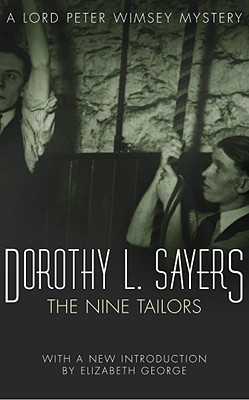
 The Nine Tailors by Dorothy L Sayers
It's not my favorite Sayers work, but that's probably my own fault for rushing through it without making an effort to understand the change ringing. Nevertheless, it has some gorgeous prose and a just-surprising-enough-but-not-too-much mystery solution.

Doctor Adrian: A Story of Old Holland by Deborah Alcock (reread)

(image from scrollpublishing.com)

This poster of Dutch Anabaptist Dirk Willems rescuing his Catholic pursuer hangs in my room. The novel Doctor Adrian takes place in the Dutch provinces, ravaged by Philip II's inquisition. I probably should mock its sentimental Victorian prose and penchant for treacherous Jesuits in disguise... but I rather like both. I like still more the title character -- a fictional protege of Andreas Vesalius -- with his fictional friend, Dirk Willems' son. Still more I like the heroic portrayal of the Prince of Orange, who is the primary focus of the next book I read...

Stories of the Reformation in the Netherlands by Ruth Gordon Short (reread)

(Praise for the Prince of Orange and other Protestants, mostly opprobrium for Philip II and his minions, though with some occasional sympathy for Charles V. That's probably all most of you care to know. Since I was having all my Orange feelings several months ago when I wasn't posting, you're all spared the recital.)

I Am Hutterite: The Fascinating True Story of a Young Woman's Journey to Reclaim Her Heritage by


Listening to this as an audiobook helped humanize the communal Anabaptist group every prairie Canadian knows on sight. Mary-Ann's life growing up in the colony was in many ways warm, loving, and idyllic. Her description of her family showed real Christianity in their lives, but as with most exclusive groups, corrupt power dynamics rose in the colony, and eventually drove her family to the difficult choice of starting a new life in the "English" world.

To Drink of His Love by Mary Wuestefeld
A young woman's experiences escaping the clutches of legalistic religion that had made her question how the gospel could really be good news.


Thursday, 1 August 2013

Conclusion: After Austen

 Jane Austen's popularity has ensured that every generation sees some writer heralded as "the new Jane Austen". Most, of course, sink back into relative obscurity, although the various genres Austen is credited as influencing continue. Having placed Austen in a tradition of ethical writers stretching from Aristotle to Shakespeare, Sarah Emsley looks at the inheritors of Austen's moral seriousness and ethical deliberation. For Emsley, three authors stand out: George Eliot, Henry James, and Edith Wharton.

Anyone familiar George Eliot knows about her emphasis on empathy, or sympathy. Emsley states that for Eliot, "Sympathy is the alternative to faith as the grounding of all virtue..." (161) Humility is a necessary part of sympathy, as Maggie rages at Tom, "You boast of your own virtues... [and] have no sense of your own imperfection" (The Mill on the Floss) However, Emsley agrees with Will's criticism of Dorothea's "fanaticism of sympathy" as unable to bring about ultimate virtue and happiness (see Middlemarch). Eliot's novels contrast with Austen's in that "faith is discussed explicitly and frequently, but the reason why it is addressed directly is that it is often either lost or endangered" (Emsley, 162). This, of course, is because Eliot had lost her once-strong faith. I admit, I love Eliot and her idea of sympathy. However, as a Christian, I think I agree with Emsley that it cannot be the sole foundation of virtue. (Rohan Maitzen has written some interesting pieces on Eliot's view of sympathy, rather than religion, as moral framework.)

In "The Janeites" Kipling declares that Jane Austen left "lawful issue" in Henry James. However, according to Emsley, in "James's later novels, virtue seems not just a mysterious desert, but an unfathomable sea" (162). In one work "Aesthetics replace ethics" (163) for the hero. In another, two characters decide on a system of "care" that entails "never consciously" wounding others. Their "care", however, involves keeping their affair a secret from their respective spouses. Their ethical deliberation "works toward what makes life.. more comfortable" (163). While in Austen's novels "it generally becomes clear where the moral center of the novel is..." this is not so for James. Emsley tells us, "Increasingly for James's main characters, the virtues are replaced by the values of modern life, values that are negotiable rather than flexible" (163). James is more interested in knowledge and analysis of ethics than ethical action. He too seems hardly a worthy heir for Austen.

Emsley argues that Edith Wharton's novels lack hope born of "faith in something positive". "The ruling value is authenticity" (165) Wharton, therefore, also fails to live up to Austen's vision of virtue that produces happiness.

Emsley concludes: "Just as Austen's contemporaries often saw virtue as sexual purity, writers after Austen tend to focus on a particular kind of virtue that informs the ethics of a given situation" (165). Throughout the book Emsley effectively argues that "Even among writers of her time, Jane Austen's exploration of the unity of the virtues is original and exceptional" (166). Austen, therefore, is unrivaled in her exploration of the virtuous life. Austen's popularity also implies that she is unrivaled in showing that "An education in virtue can be dramatically interesting" (167).

As I stated at the beginning of this series, the best books "show us to ourselves". Despite being an academic work, Emsley's engagement with the principles of ethics helped me think more deeply about my ethical foundations. Her emphasis on Austen's Christian moorings made me think more closely about love, hope, and faith as ways of seeing and reacting to life. (And, yes, by extension I even thought more closely about some statements of Paul's.) I'll continue to look back on this book as a pivotal experience as I navigate the worlds of Austen criticism and virtuous life.


 This series of posts would not have been possible without Esther, who graciously sent her copy of Jane Austen's Philosophy of the Virtues all the way to Canada for me to read. (Esther has herself written a series of posts on this book, which summarize it beautifully, doubtless covering points I missed.) I also want to thank all my perspicacious friends who commented (keep it up! the discussions don't have to end!) and shared thoughts. I especially appreciated the thoughts that the Mansfield Park post generated. And lastly, thanks to Sarah Emsley for writing such a great work and even mentioning this series on her excellent blog.

Balancing the Virtues in "Persuasion"

I have a theory that Austen made the heroines of her successive novels studies in contrast. Quiet Fanny follows sparkling Elizabeth, persuadable Anne follows confident Emma. According to Sarah Emsley, Anne is also a foil to Emma in truly possessing the "resources of mind and spirit... that Emma Woodhouse thinks she herself possesses" (Emsley, 145). Emsley also sees Persuasion as the most explicit of the six novels in balancing the virtues. She states, "Anne's argument at the end of the novel that she was right to take Lady Russel's advice, even if the advice was wrong, demonstrates that for Austen, ethics has to do with character rather than rules" (146).

Austen makes deliberate reference to the need for balance -- in this case between firmness and persuadability -- after Louisa's disastrous fall. This "recalls Aristotle's doctrine of the mean, in which virtuous qualities have proportions and limits. Though Wentworth himself does not realize it, he does think that to be sometimes persuadable is a good thing, as he has recommended that Louisa persuade Henrietta to be firm" (148).

Emsley also agrees with my theory that "It is Wentworth, not Anne, who must change in this novel" (149). Once again, critics who claim Austen does not deal with the minds of men are proven wrong, through Wentworth's succinct account of how he came to recognize his own pride.

In Persuasion, Anne must exercise her judgment in her treatment of her varied acquaintances -- from the prideful Lady Dalrymple, and the seemingly-charming Mr Eliot, to the humble Mrs Smith. Emsley demonstrates that in this novel right treatment of others requires consideration, not of "birth or fortune", but of "understanding and value" (153). Sir Walter and Elizabeth are notably without such judgment in their treatment of "only Anne" whose "elegance of mind and sweetness of character" should distinguish her.

Emsley presents Anne's pang of conscience while reading Mr Eliot's private letters as an example of the virtues in tension. In this situation "the code of honor that protects a man's private life and letters conflicts with the attempt of two women to establish the truth. In this case, truth must win in order for Anne to preserve her own character, and to separate herself and her family from the designs of Mr Eliot.. [T]he real virtue of truth triumphs over mere rules..." (154)

When Anne argues that women love longest "when hope is gone" she is uses no literary examples, and it is clear she is thinking of her own situation. However, her behavior throughout the novel demonstrates that she does possess hope, if not in a renewal of Wentworth's love (though this is a primary theme of the last section of the novel), then in something greater than herself. "[It] is through constancy and faith in Persuasion that [Austen] demonstrates the unity of the virtues... Constancy is the natural consequence of the uniting of the classical virtue of fortitude with the Christian virtue of hope" (156). While some critics have argued that Anne is depressed at the beginning of the novel, her consistent actions of kindness and care for others are examples of fortitude born of hope. This is hope as Paul conceives of it in Romans 5:4, "Experience [worketh] hope." Like love, it is not merely an emotion, but a way of viewing the world that motivates action toward others. In short, Anne possess Paul's trivium: faith, hope, and love. Emsley concludes that "Persuasion contains the closest thing to an explicit theory of the unity of classical and Christian virtues" (158).

These thoughts are drawn from Sarah Emsley's book Jane Austen's Philosophy of the Virtues.