There is no frigate like a book
To take us lands away,
Nor any coursers like a page
Of prancing poetry.
~ Emily Dickinson

Literature is my Utopia. Here I am not disenfranchised. No barrier of the senses shuts me out from the sweet, gracious discourses of my book friends. They talk to me without embarrassment or awkwardness. ~ Helen Keller

Showing posts with label feminism. Show all posts

Thursday, 4 July 2013

On Rachel Held Evans' "A Year of Biblical Womanhood"


"If a woman was pastor of our church, I wouldn't go," my grandma declares over Sabbath-evening supper. "I'd stay at home for church."

"Then you'd be leading the service," I tease. "You'd have to get a man to read aloud to obey Paul."

"You know what that passage really means don't you?" Aunty L asks and proceeds to give the traditional Adventist interpretation of how in those days men and women sat in separate sections of the synagogue and services were being disrupted by women shouting questions to their husbands. Nobody acknowledges the irony as we put that injunction of Paul's firmly in its cultural context, but go on to declare we know that Doug Bachelor will present the "Biblical view" to the SDA ordination committee. (The "Biblical view" being that since no female priests served in the tabernacle, no woman should be ordained to gospel ministry today. To my knowledge none of the men ordained at camp-meeting last year were descendents of Aaron, or of the tribe of Levi.)

When I was 16 I went to a conservative Adventist "family camp" that emphasized character building and family issues. The year before the speakers had taught what I later learned is an aspect of Christian Patriarchy - girls shouldn't hold jobs outside of the home. This year I covertly watched a family whose "patriarch" had decreed that the women of the family could not go to church during their periods. They were obviously fanatical. (Although three years before I might have agreed with them on the "Thou shalt only wear long skirts and dresses" addition to the Decalogue.*) I provide these anecdotes to show that in a conservative Adventist family, I grew up in a culture - like the larger Evangelical culture - very concerned with "Biblical womanhood", but filled with disparate interpretations and practices.

It is these baffling varieties of "Biblical womanhood" and the attitudes and assumptions that led to their formation that Held Evans' takes apart in her best seller. It's a hilariously funny book and her experiments in following various texts - from camping in a tent during her period to mothering a battery-operated baby - have laid her open to charges of mockery and attempting to destroy Christianity. However, like all good comedy, the book is gravely serious: the "burdens, grevious to be born" laid on women through unbending expectations, the theologies that foster abuse (i.e. Miachel and Debi Pearl's teachings), and the poverty experienced by women worldwide.

The book demonstrates that we all - fundamentalists and progressives, complementarians and egalitarians, alike - need to learn that God's dealings with humankind represent principles more often than rules. Any good Bible students knows the pronouncements and stories of the Old Testament condemning intermarriage between Hebrews and the heathen. But God isn't confined - He holds up the courage of foreigners Ruth and Rahab, and makes them part of the line of Christ. Or there's the fact that according to the Levitical code, the woman with the issue of blood was not allowed to touch Jesus, but He praised her counter-culture act of faith.

Held Evans also points out imperfect translations of Greek and Hebrew words that have influenced traditional understandings for centuries. For example, the Greek word kosmios translated as modest in 1Tim 2, is translated more perfectly as self-controlled when pertaining to the qualities of a bishop in the following chapter.

This leads me to why I'm a little afraid sometimes to speak my doubts on difficult scripture passages. I'm a Protestsant; I grew up on Luther's "Except I am persuaded by the testimony of scripture or by plain reason..." I don't want to take the Bible lightly, or to be seen as doing so. However, in that reformation statement is the twin of Sola Scriptura: The priesthood of all believers. From Luther pointing Zwingle to his HOC EST MEUM CORPUS on the tablecloth, to my suspicions of the centring prayer practises Held Evans - like many progressives - advocates, disagreement has not only been rife, but necessary. These disagreements, these "Where in the world did she get that idea?" moments as I read this book sent me flipping through my Bible. I'd consider that an indication of a book being worth reading.

Sometimes in the Bible's countless difficult texts we forget the unequivocal "The greatest of these is love." That's why Held Evans' chapter on her trip to Bolivia with World Vision was my favorite. In it she introduces us to Elena, living in a remote mountain village, sunk from poverty into indigence by her husband's disabling stroke. Yet, in conditions that would make most of us beg for aid, she has given aid. She shares with her adopted daughter, Arminda, her 'mite' - quite literally a dwelling with the pigs.

In conclusion, I will continue to question and agonize over scriptural interpretation, gender roles, and cultural responsibility. I trust Rachel Held Evans will too. (Although she was in contact with a practicing Jewish woman throughout her experiment, she may want to look into concerns about appropriation of Jewish language and customs before she continues celebrating festivals and blowing shofars in her home.) Yet despite differences and questions, I will continue to champion with her the healing truths that reach out to all - women, men, conservatives, liberals, Mary Magdalenes and Simons - as described in Held Evans' words:

What I love about the ministry of Jesus is that he identified the poor as blessed and the rich as needy... and then he went and ministered to them both. This, I think, is the difference between charity and justice. Justice means moving beyond the dichotomy between those who need and those who supply and confronting the frightening and beautiful reality that we desperately need one another.
 That's what I love about the Kingdom: For the poor there is food. For the rich, there is joy. For all of us, there is grace. 

* I still wear long skirts and dresses to church and camp-meeting. But now it's largely because they hide the hair on my legs, rather than because it makes me more holy.

Thursday, 28 February 2013

When I cannot say Enough (FemFest Day 3)

Welcome to Day 3 of the Feminisms Fest synchroblog on the topic “What You Learned.” Link up on,seeprestonblog.com, considering these questions: What surprised you this week? What did you take away from the discussion? What blog posts did you find particularly helpful? What questions do you still have?

 I haven't had the time yet to read through all the posts for FemFest, but I'll encourage everyone interested in a Christian conversation to check them out. (And even for those just wanting a definition, here's a great one.) So I'm not focusing in this post on new facts I've learned, but on an ever more important discovery. Often I've felt driven to a far country by Christian naivete and even opposition to the causes of "the least of these" - especially feminism - that I believe make the heart of Jesus bleed. I've sometimes thought I'd eventually leave the church because I couldn't find passionate Christians who understood the issues. But FemFest has gathered not a few, but scores of people whose Christianity suffuses all things, and who credit it with making them feminists. I've found complex understandings of the evils of patriarchy and rape culture - no "Christianized" excuses offered. From the East and the West (from all the binaries of sex, race, culture, theology) they've come and sat down to this conversation. This conversation is titled Feminism, but it's also about equality and justice for men, racial minorities, gender non-conformists, and all those that are bruised. At this table I've found my people.

And yet. Yet there are questions.

If God is so powerful and just, why did He have to work with the oppressive norms in times past?

Where should the line be drawn on (mutually-chosen) control and dominance in consensual sexual relationships? Does the desire in a woman make it a valid form of expression, or is it the biological and cultural response to centuries of rape culture?

I've come to strongly believe that the typical fundamentalist Christian emphasis on modesty feeds a bastardized "Christian" rape culture and also alienates women from their bodies. But after we've brought up our boys to take responsibility for their own lust and to understand the evil of objectification... after we've taught our girls that sexual abuse is NEVER their fault because of what they wore... after we've taught both sexes that their bodies are glorifying to God, not shameful... after we've taught them that modesty begins in the soul, not the body.... after all that, is there a place or time for a few well chosen words on dress as a Christian witness? I know if there is, there will be a constant need to gaurd against the legalism we see so much today.

Am I less of a feminist because I'll never participate in a SlutWalk topless, even though I want to shout in the streets the danger of automatic equasion of breasts with sexuality?

These are a few of my questions, but I'm committed to the sitting at this table, under this tent, having this conversation, each day.

Yes, my complementarian Christian background effects my thoughts about feminism. Yet, ultimately, my feuding feminism and Christianity are actually married; they are one. Theirs is the story of my search for justice, greatness, and unconditional love. Theirs is the story of my questions, and of the contradictory answers that can't fully satisfy me. Theirs is the story told by Christina Rossetti in “The Heart Knoweth Its Own Bittnerness” - a story that that finally has a happily ever after...  but not yet.

I return to this poem frequently when I'm troubled by the unanswered questions, the incomplete journeys, the unhealed wounds of every life in this world. I return to this poem because it doesn't offer glib answers. It picks at the scabs over the infection and makes the blood flow. And the only solution it offers is someday. I can accept that solution because it hurts so much that it must be real.

How can we say "enough" on earth--
"Enough" with such a craving heart?
I have not found it since my birth,
But still have bartered part for part.
I have not held and hugged the whole,
But paid the old to gain the new:
Much have I paid, yet much is due,
Till I am beggared sense and soul. 

* * *           ***

 Not in this world of hope deferred,
This world of perishable stuff:--
Eye hath not seen nor ear hath heard
Nor heart conceived that full "enough":
Here moans the separating sea,
Here harvests fail, here breaks the heart:
There God shall join and no man part,
I full of Christ and Christ of me.

Wednesday, 27 February 2013

Embracing the Labels (FemFest Day 2)

 Welcome to Day 2 of the Feminisms Fest synchroblog on the topic “Why Feminism Matters.” Link up below on my blog, fromtwotoone.com, considering these questions: What is at stake in this discussion? Why is feminism important to you? Are you thinking about your children or your sisters or the people that have come before you? Or, why do you not like the term? What are you concerned we’re not focusing on or we’re losing sight of when we talk about feminism? Why do you feel passionately about this topic?

Labels are scary. When I'm blogging on tumblr, where many of my followers seem to be feminists, I have been reluctant to talk much about Christianity. I worry they might equate my Christianity with a certain set of politics and decide I'm not the right kind of feminist.

I have a tag on this blog that I've used a couple times: "feminism - maybe". In my "real" off-line life I have sometimes been reluctant to call myself a feminist because many people I know equate feminism with a "secular agenda."

There are more substantial problems with both labels too. No, I don't agree with everything ever advocated in the name of feminism. I can sympathize with those who find the feminist label problematic because they feel the movement has not embraced them as women of color, trans-women, etc. Yes, I'm concerned about racism, poverty, sexual abuse, and rape of both sexes (and all genders). Sometimes I think I should just go with the label humanist.

And yet I'm afraid not to identify as feminist.

 I'm afraid because misogyny, patriarchy and rape culture are insidiously hidden in the way many people speak.
 
I'm afraid because this isn't just a woman's issue; patriarchy and rape culture hurt men too, so feminism is humanism.

I'm afraid because in a culture of pervading marginalization, if I don't speak my convictions loud and proud, my silence may be seen as endorsing the norms.

As I've said in my previous post, if there's one thing my feminism challenges, it's my Christian faith. Sometimes my faith challenges my feminism. However, I'm also afraid not to declare myself a Christian feminist. 

I'm a Christian feminist because I've sat through sermons where it was declared that if a woman's ankles are showing she is naked.

I'm a Christian feminist because a man whose religion seems to be about preventing the spread of women's ordination has sat in my parents' house and said, "You lie," to his wife. He publicly spoke those hurtful words merely because she disagreed with him on what time she'd been ready for church that morning. 

I'm a Christian feminist because when a prominent youth leader in my denomination raped a young woman, some people considered her the devil's instrument to bring "a man of God" down.

I'm a Christian feminist because I think more women in leadership would mean that situations like the one above would be handled with more compassion and understanding for the survivor, less commiseration for the member of the boy's club.

Yet, somehow, in all this "I'm afraid", my feminism is about seeking perfect love that casts out fear. (1 John 4: 18)

Feminism is about casting out the fear every woman feels walking alone at night. Who are we kidding? It's a fear every woman feels walking alone. Period.

Feminism is about casting out the fear every rape survivor feels in telling her story, because she knows "What were you wearing?" and "Have you had sex with him before?" will be asked.

Feminism is about ending the fear every woman has that an unplanned child will shut her door to education or hang a scarlet letter around her neck. 

Feminism is about casting out the fear of hearing expressions of surprise, disapproval or hatred directed at women in more typically male-dominated careers, disciplines or activities.

Feminism is about how I just reworded the above sentence from "masculine careers" to "male-dominated", because we start telling girls and boys how their minds should work so early in life.

Feminism is about making these fears obsolete because women are treated as full humans.

In closing, let me return to the question of labels. I choose to consider myself a Christian, despite having dozens of questions and being appalled by countless "Christians" who have besmirched the name. I embrace the label because it connects me with a community of people across time, continents, race, and gender, who have loved the same Person. The name connects us in our questions; even if they aren't answerable now, we're committed to seeking answers, seeking love.

The same is true for me as a feminist. Yes, I still have unanswered questions about feminism, some of which I'll talk about in tomorrow's post. However, embracing the label grafts me to the movement, the passion, the search, the conversations. I am invested in this ideal and in its everyday, gritty practicalities. Like my faith, feminism gives me hope while I bleed for a suffering world. Yes, some days it makes me afraid. Ultimately, though, it gives me a vision of love casting out the fear and torment faced by women around the world.

What about you? What gives you vision and hope? What labels do you embrace or reject?


Tuesday, 26 February 2013

Feminism and Me

I've long considered writing a post on this subject, because it explains so much of who I am. Lately, spending more time in the Christian blogosphere than the literary one, I came across the opportunity to engage in the subject with other Christians. Enter FeminismsFest - an effort to get people (especially Christians, I gather) discussing what feminism means to them. And while my posts for FeminismsFest don't keep this strictly a book blog, yet, as with so much of my life, books and words gave birth to this part of me too. It's a long and complicated story, bear with me. I've tried to provide some structure by weaving the suggested questions into my story.


  What is your experience with feminism?

Growing up in a conservative Seventh-day Adventist Christian home, I didn't hear a lot about "feminism". (I certainly can't remember when I first encountered the idea or in what light.) My mom was a stay-at-home mom; my dad made the living. Girls were supposed to be ladylike; gender differences were marked. (Of course, I wasn't always ladylike - screaming out the window of the car and being rebuked, playing "the girls chase the boys" while my parents attended spiritual seminars.) Reserve and modesty, I was taught, surrounded a girl with a wall of protection. It wasn't stated, but it was implied, that bad girls brought bad things on themselves.

Yet I also read books about strong women and girls, like Florence Nightingale or Laura Ingalls Wilder. I remember reading about and admiring Elizabeth Cady Stanton.  In fiction I met Jo March and Anne Shirley, girls overflowing with ambition and autonomy.

Around age 13, under the influence of a uber-conservative 19 year-old friend, I eschewed pants in favor of long skirts and dresses. For a little while modesty was my hobbyhorse, and I was drifting in the direction of Christian patriarchy.

Continuing my story with the second question: What’s a story or a memory or a person that you associate with that word?

Though I didn't realize it then, the pivotal moment came at age 14 when I first listened to an unabridged audiobook of Jane Eyre. I was obsessed. I sat on the hardwood of my bedroom floor crying over the beauty of Rochester's words, "My bride is here, because my equal is here, and my likeness."

I don't mean that those words made me a feminist, though they resounded deep in my heart. Rather, it was my new obsession with the story that led me to pick up The Madwoman in the Attic. That book didn't make me a feminist either, but it gave me a new perspective and a new language on patriarchy and women's struggles with oppression through the ages. I had found the unifying story in the classic novels I was reading: the women's story.

 My "wordlly" interest in literature and film led me to become a fan of actress Emma Thompson. In her interviews, she talked about feminism a lot. Her work with the Helen Bamber Foundation opened my eyes to the horror of human trafficking. Her letter to herself at age 16 helped me, at that same age, to stop worrying about how others saw my body.

 Why does it have negative or positive connotations for you?

I was coming to accept the label "feminist" for myself, but my Christian culture still repelled it. A strong "mother in Israel" - a matriarch who wasn't afraid to rebuke men - once cautioned her granddaughter and me with the words, "You don't want to be women's libbers."

Why not? I asked myself. Didn't Jesus come to proclaim "liberty to the captives... [and] them that are bound"? (Isaiah 61:1)

The culture I was raised in would probably be described as complementarian, although the "as unto the Lord" clause of Ephesians 5 was emphasized. Beyond the proof texts offered by complementarians, historic Adventism's problem with the women's movement encompassed the free-love-advocating spiritualists, like Victoria Woodhull, who were prominent in the suffrage movement. 

Usually I don't find the above issue especially problematic. I believe I can consider myself a part of the women's movement without supporting everything done in its name, just as I don't support so much done in the name of Christianity. Yet some days it worries me a little and I want to distance myself from much of feminism, just as I want to distance myself from much of Christianity.

Frequently disturbing for me have been texts like Ephesians 5: 22-24. Sometimes I've been sure that I can't submit to a mortal man so fully, so will have to be perpetually single to maintain my Christian obedience. Lately, I've come to understand verse 22-24 as subordinate to verse 21.

Most days I'm pretty firmly on the side of women's ordination, although mentioning Korah, Dathan and Abiram may bring niggling doubts about questioning God's choices.

I still don't know how to deal with the Old Testament's patriarchal pronouncements on rape, virginity, and impurity. I admit that there's sometimes a conflict between the Old Testament and the feminist sensibilities I've developed. And then I remember that the all scripture testifies of Jesus - He who makes all one in Him. (Galatians 3:28) And, yes, I'm still confused. Some days I'm stronger in my feminist beliefs, some days in my Christian ones. I confess that I question and reexamine the bases for both.

How do you define the term, either academically or personally? What writers have you read whose definitions you want to bring out?

I can't think of a quick definition off the top of my head, other than one that has been attributed to various sources. I believe I first read in Click: When We Knew We Were Feminists: "Feminism is the radical notion that women are people."

My feminism has come a long way from my tentative first steps opening feminist literary criticism. I now understand the way "modesty" and "purity culture" contribute to ubiquitous rape culture. (More on that in another post.) I identify with many feminists as (generally) politically liberal. I recognize the intersectionality between gender, race, and feminism. I don't like abortion, but I get really angry about the way it's opposed by many Christians, Republicans and (let's face it) rich, white dudes.

I haven't actually read a lot of feminist books. More of my influences (especially in the last few months) have been from feminist bloggers, like thefemcritique on tumblr, and HerbsandHangs (especially dealing with rape and rape culture). Love, Joy, Feminism was especially interesting when I was reading, in fascinated horror, about the purity movement last year. I don't agree with everything on these blogs, but I think they give a good sample of secular feminist thought. I also have quite a bit of stuff on feminism on my own Tumblr blog.

Well, I must hie me to bed. I've only scratched the surface of my own relationship with feminism, but there's two more days to try to dig a little deeper. My hope is that, disjointed and shallow as these posts may be, they will help someone understand feminism a little better.

The only question left to be settled now is: Are women persons? And I hardly believe any of our opponents will have the hardihood to say they are not. Being persons, then, women are citizens; and no state has a right to make any law, or to enforce any old law, that shall abridge their privileges or immunities.
-- Susan B. Anthony


Sunday, 6 January 2013

Six Standouts from Six Months

I'm probably the last blogger posting a 2012 reading wrap-up post, but I felt the need to post something. Actually, this isn't a wrap-up for the whole year. Since I posted Monthly Reading Roundup reviews for the first half of the year, these are some standouts from the last six months when I wasn't blogging.

Best Reread of an Old Favorite
Jane Eyre, of course. I've reread it every year since first discovering it at age 14, but rereading it at age 18 - the age Jane is through most of the novel - was a special experience. I filled up my copy (the one above, with the beautiful Millais painting, edited by Stevie Davies) with dozens of post-it-notes. I'm sure I'll do the same next year too; each rereading opens to me new themes, new lessons to be learned, new complexities to be explored. 

Best Feminist Work
Perhaps I should list Wide Sargasso Sea, but it really wasn't my thing. Instead I'll go with a book from an Adventist press (i.e., something less worrisome to my mom than dangerous worldly novels) 
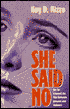
She Said No by Kay D. Rizzo

 
This book illustrates the important point that “nice guys” rape. Even “good guys” - like the ministerial student in this story - can commit rape when they think a woman owes them something. No matter what a woman has done - with that man or any other - the moment she says No and he continues, it is rape. But the hard thing about acknowledging this fact is accepting that, while rape is a crime of violence that tragically effects the victim and their loved ones for the rest of their lives, rape is not so different a sin from the ones we all commit regularly. Any man (and, yes, women rape, but on a significantly smaller scale) who allows himself to listen to the dominant rape culture - which tells him women owe him something or that a woman's “slutty” behavior entitles him to a "sample" - may commit rape. This realization leads to some disturbing questions: Can we ever fully trust any man? Should we extend the same Christian grace to former rapists as to those who have committed other sins? 
 
Christians cannot afford to accept the excuses for rape offered us by rape culture. But does the Christian message of forgiveness of the vilest sins mean we should forget and accept unconditionally? I don't think so, but where do you think the line is drawn? 

Book Which Evoked Most Audible Exclaimations
The Price of Freedom by Simon Ivascu & Wesley Pop (CoAuthor: Bev Ellen Clarke) 
The true story of two young men who escaped communist Romania in a shipping container, in order to remain true to their faith. It made me exclaim aloud frequently for several reasons. 1. It was just that dramatic and harrowing. I kept saying, "They are going to die. They just couldn't have survived, even though their pictures are on the back cover!" 2. My exclamations made my best friend attempt to steal the book from me, provoking "World War III". 3. The co-author is a distant relative of my family, but her use (or misuse) of em-dashes and italics left my editor's soul thoroughly frustrated.

Best Play

Richard II by William Shakespeare. Frankly, my obsession with this play (and indeed, the whole Henriad) is due more to the recent BBC "Hollow Crown" production, than just to reading. However, my feelings for "poor Richard" himself align with my frequent sympathy for anti-heroes, or failed characters. Although Richard starts out as an unsympathetic character, I confess that I identify with him. Like myself, he's good at words, not actions and decisions. Politically and personally he's a tragedy, poetically he's unrivaled.  (Except by Henry V, who is annoyingly good at all aspects of kingship, if one can put aside our modern peevishness at massacre and autos da fe in a "glorious" cause.) Basically, I tend to think "Richard II c'est moi"; that is not a very cheerful view of myself, but is in itself rather Richard-like, isn't it?

 Best General Fiction
 
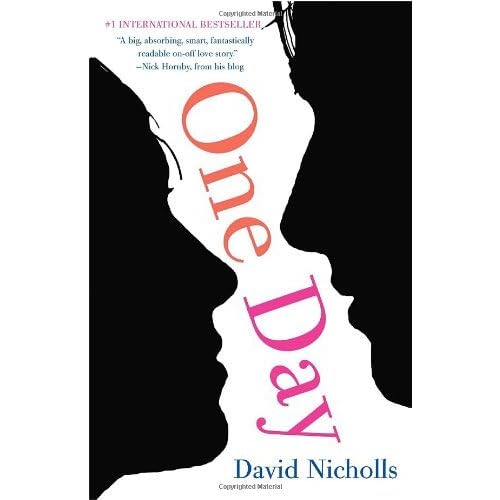
One Day by David Nicholls

An almost perfect book, in its sphere. Because it is set in just one day (St Swithin's Day) of each year of an almost-twenty year relationship, there are “scenes” missing, questions left unanswered. But in leading us on a journey through two lives it is utterly real and fully engaging. Maybe more so because much of the time "hero" Dexter is bordering on despicable, and even generally-likeable "heroine" Emma descends below pathetic. But somehow, without obviously showing it, Nicholls makes them both redeemable. For me it's the moment Dexter is at his lowest, crying to an indifferent stripper. And as the final pang comes the revelation that when he drunkenly thought her bowed head indicated she was praying for him, in reality “while he has been talking about Emma, she has had her mobile phone in her lap and is writing a text.”

What makes Dex and Em's friendship beautiful and bigger than their romance is that for some reason she was the one person who loved him unconditionally.
Strangely, though written by Nicholls himself, the movie lacks the emotional engagement of the film. It's not just the destined-to-failure task of condensing each day into a couple minutes. It's also the removal of the complicated and ugly things about the characters. (Like Emma's affair with the married headmaster of the school where she teaches. Or the beautiful not-quite-love-letter that Dexter writes but never sends.)

P.S. The film also made me more afraid to start riding my bike in town. Ugh.


 Best Memoir
 
Ten Thousand Sorrows by Elizabeth Kim

Watching her mother hung by her relatives for having a child with an American soldier was just the beginning of this Korean war orphan's "ten thousand sorrows". Adopted by a fundamentalist evangelical couple, she was abused and stifled, finding her only comfort in the discovery that "literature could connect [her] with something larger than [her] own life..." With its connection to literature, its brutal honesty, and its ultimate recognition of the ten thousand joys that also enter every life, this is... it would be vulgar to say a "favorite" book of the year... rather it was a heart-wrenching unfolding of the paradoxical delicacy and resiliency of the human spirit.


Book I Fell Madly In Love With, Without Actually Reading This Year

Middlemarch  by George Eliot. The last time I read it through was the end of 2011. But it's a book I slowly fall more and more deeply in love with each time I revisit even a few sentences. If Jane Eyre is the emotional love of my life, then Middlemarch is the intellectual and moral one. I've started a George Eliot Tumblr, but it's on my own personal tumblr that I rant about my feelings for my "hometown". 

I'm hoping in 2013 to read more, and allow myself to be distracted by internet reading - even book blogs - less. I probably won't sign up for any challenges, since I don't seem to stick to them anyways. I do have self-set goals to read Dorothy Sayers mysteries, C.S. Lewis' works on Christianity, more George Eliot, and try to keep up with the bloggers reading through the novel list in The Well Educated Mind.

"Being a reader is sort of like being president, except reading involves fewer state dinners, usually. You have this agenda you want to get through, but you get distracted by life events, e.g., books arriving in the mail/World War III, and you are temporarily deflected from your chosen path." 
-- Nick Hornby